Mold Myths vs. Facts: What Every Property Owner Should Know
Mold is one of the most misunderstood hazards in property management. Online forums, social media, and well-meaning friends spread dangerous misinformation that can put your health and property at risk.
As IICRC-certified mold remediation specialists with over 50 years of experience, we've seen the consequences of these myths firsthand. This article separates fact from fiction to help you make informed decisions about mold in your property.
Why This Matters
Believing mold myths can lead to inadequate cleanup, health exposure, and tens of thousands in unnecessary property damage. The truth about mold can save your health and your wallet.
Common Mold Myths Debunked
MYTH #1
"Only black mold is dangerous"
THE TRUTH
ALL mold can cause health problems. While Stachybotrys (black mold) produces dangerous mycotoxins, other molds like Aspergillus, Penicillium, and Cladosporium also pose serious health risks.
Color alone doesn't determine toxicity. Mold identification requires professional testing. Regardless of color, all indoor mold growth should be professionally removed using proper containment and HEPA filtration.
MYTH #2
"I can clean mold myself with bleach"
THE TRUTH
Never attempt DIY mold removal. Here's why:
- • Bleach only kills surface mold, not the roots (mycelia) embedded in porous materials
- • Disturbing mold releases millions of spores into the air, spreading contamination throughout your home
- • You're exposing yourself to dangerous mycotoxins without proper PPE and ventilation
- • The visible mold you see is only 10-20% of the actual growth—the bulk is hidden inside walls, under floors, and above ceilings
- • Without addressing the moisture source, mold will return within weeks
Professional remediation requires containment barriers, negative air pressure, HEPA filtration, antimicrobial treatments, and clearance testing—equipment you don't have at home.
MYTH #3
"If I can't see mold, there's no mold problem"
THE TRUTH
The most dangerous mold growth is often hidden from view. Common hiding spots include:
- • Behind walls and inside wall cavities
- • Under flooring and carpet padding
- • Above ceiling tiles
- • Inside HVAC systems and ductwork
- • In crawl spaces and attics
- • Behind wallpaper and paneling
If you smell a musty odor but can't see mold, there's likely extensive hidden growth. Thermal imaging and moisture meters can detect hidden colonies before they become visible.
MYTH #4
"Mold only grows in old, poorly maintained buildings"
THE TRUTH
Mold can grow in ANY building—new or old—if conditions are right. Mold only needs three things:
- Moisture - From leaks, condensation, flooding, or high humidity
- Food source - Drywall, wood, carpet, paper, fabric, dust
- Temperature - 40°F to 100°F (essentially all indoor temperatures)
We've found severe mold in brand-new construction due to poor ventilation, in luxury homes with undetected plumbing leaks, and in modern buildings with HVAC condensation issues. Building age is irrelevant—moisture control is everything.
MYTH #5
"Dead mold is harmless"
THE TRUTH
Dead mold can still cause allergic reactions and health problems. The mold spores and mycotoxins remain allergenic and toxic whether the mold is alive or dead.
This is why simply killing mold with bleach or biocides isn't enough—you must physically remove it. Professional remediation includes complete removal of contaminated materials and HEPA vacuuming to eliminate dead spores.
MYTH #6
"Mold testing is a waste of money"
THE TRUTH
While it's true that visible mold should be removed regardless of type, testing is valuable when:
- • You smell mold but can't locate the source
- • You're experiencing unexplained health symptoms
- • You want to verify remediation was successful (clearance testing)
- • You're buying or selling a property
- • You need documentation for insurance claims or legal issues
Testing identifies mold species, spore concentrations, and hidden contamination—information that guides remediation strategy and verifies your indoor air quality is safe.
The Bottom Line
Mold is a serious issue that requires professional expertise, not internet advice. The money you save on DIY attempts will be dwarfed by the cost of:
- • Spreading contamination throughout your home
- • Health problems from exposure
- • Structural damage from inadequate remediation
- • Repeat mold growth because the moisture source wasn't addressed
- • Property value loss if mold issues aren't properly documented and resolved
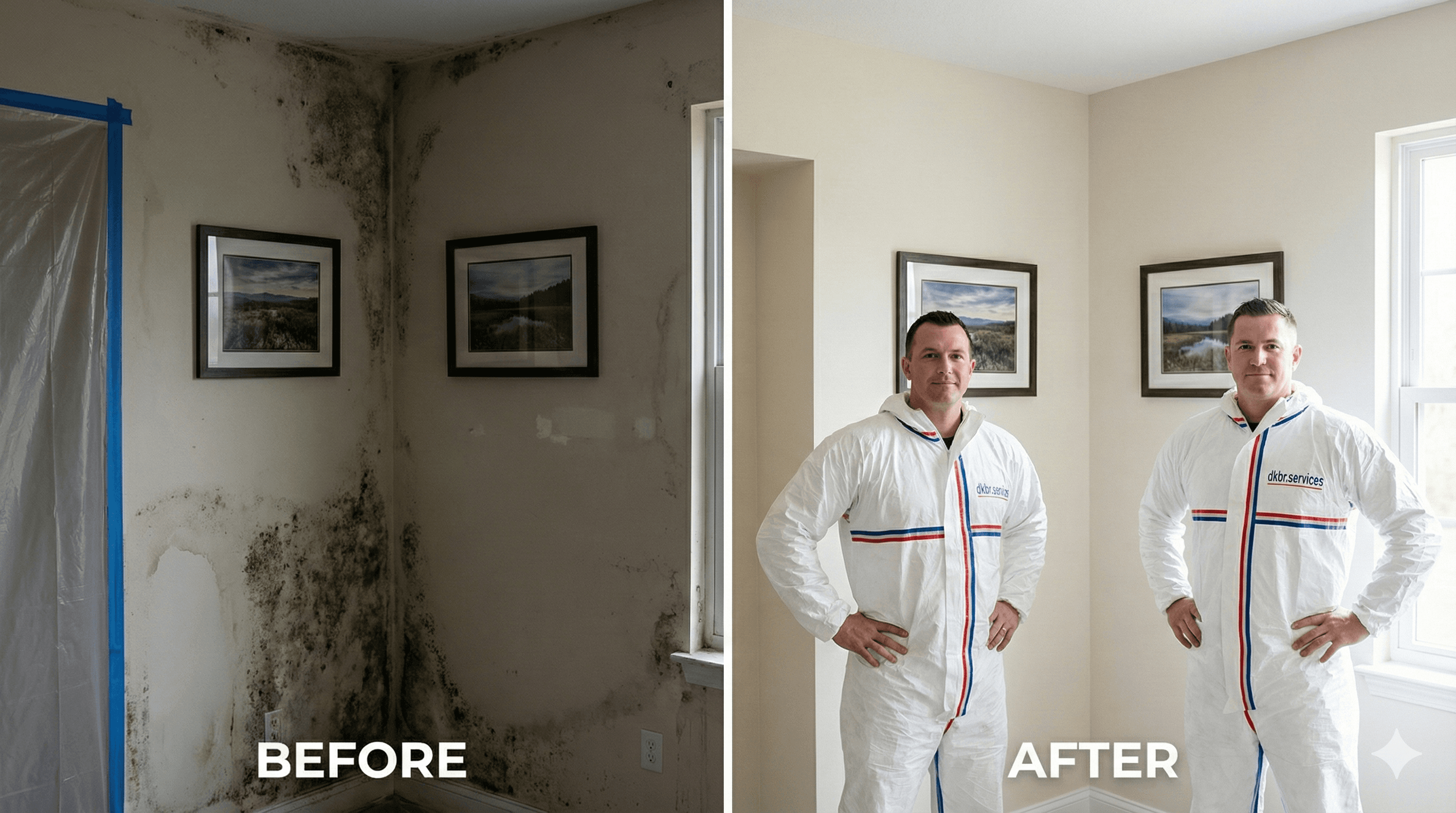
Professional Mold Remediation Includes:
- ✓ Comprehensive moisture inspection with thermal imaging
- ✓ Proper containment with plastic barriers and negative air pressure
- ✓ HEPA filtration to trap microscopic spores
- ✓ Safe removal of contaminated materials
- ✓ Antimicrobial treatment to prevent regrowth
- ✓ Complete structural drying
- ✓ Clearance testing to verify safety
- ✓ Identification and repair of moisture sources
Protect Your Health and Property
Don't let mold myths put your family's health at risk. If you see, smell, or suspect mold in your property, contact certified mold remediation specialists immediately. We offer free inspections, work directly with insurance companies, and guarantee safe, thorough remediation that passes clearance testing.
Professional Mold Remediation You Can Trust
DKBR's IICRC-certified mold remediation specialists follow industry best practices for safe, effective mold removal. We offer free inspections and work directly with insurance companies.
Call (800) 655-2005 for Free Inspection